
TL;DR: Professional burst pipe cleanup follows a set sequence: water extraction, moisture mapping, removal of materials that can’t be dried, then monitored drying with air movers and dehumidifiers until every reading hits standard clearance numbers. A single-room loss usually takes three to five days to dry; a loss that got into wall cavities or multiple rooms can take a week or longer. The job isn’t finished until meters confirm the structure is dry, not just when it looks dry.
If you shut off the water, mopped up what you could, and the plumber already capped the break, you’re past the part most guides cover. This is what happens next: the part where a crew actually gets the structure dry and keeps it from turning into a mold claim. If you haven’t done the first-hour steps yet, our burst pipe emergency checklist covers that; this post picks up where that one ends.
What happens during professional burst pipe cleanup?
Burst pipe cleanup is a five-step sequence: extraction, moisture mapping, selective demolition, structural drying, and clearance testing. Skipping any one of them is how a “dried” house still grows mold in the walls six weeks later.
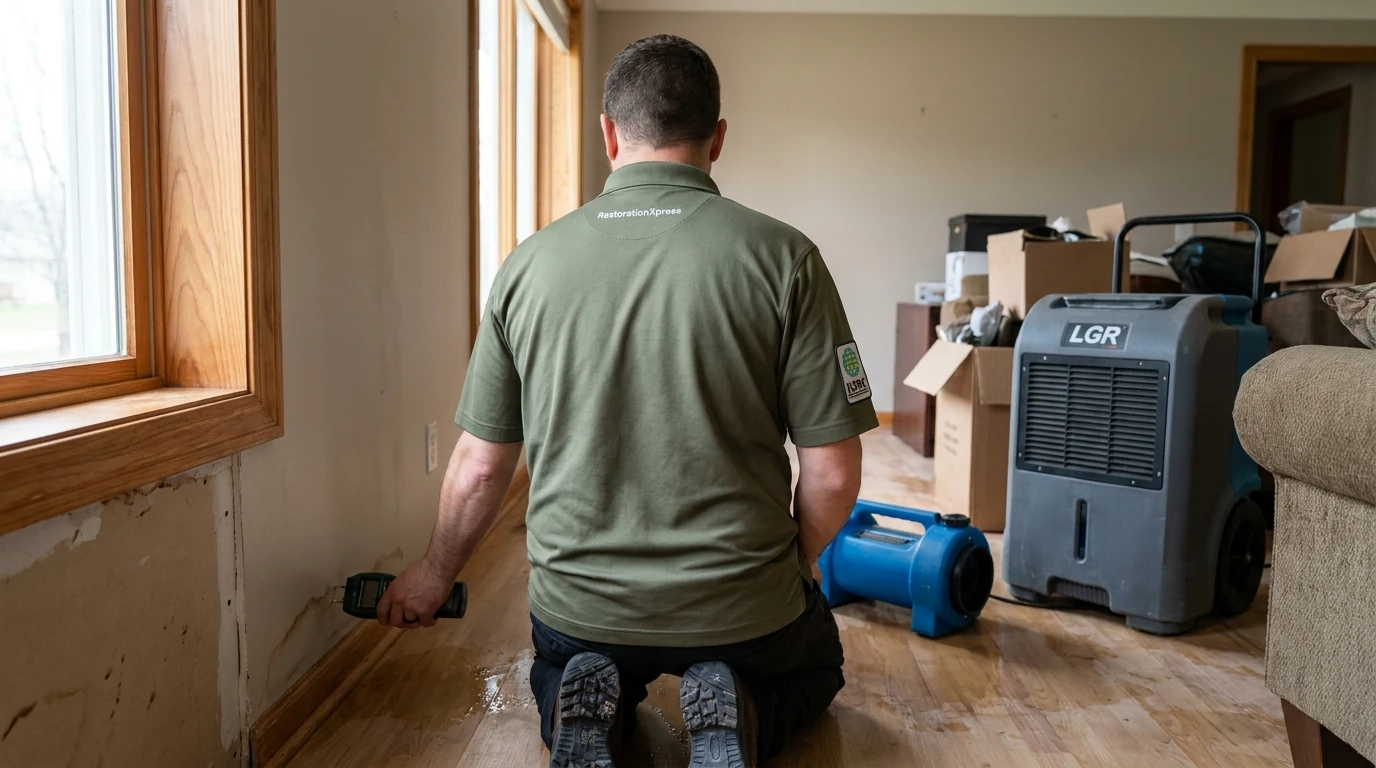
A technician starts with truck-mounted or portable extraction to pull standing and absorbed water out of carpet, pad, and flooring. Then comes moisture mapping: a penetrating moisture meter checks drywall, baseboards, subfloor, and cabinetry to find exactly how far the water traveled, including into wall cavities you can’t see. Only after that mapping is done does anyone decide what gets torn out versus dried in place.
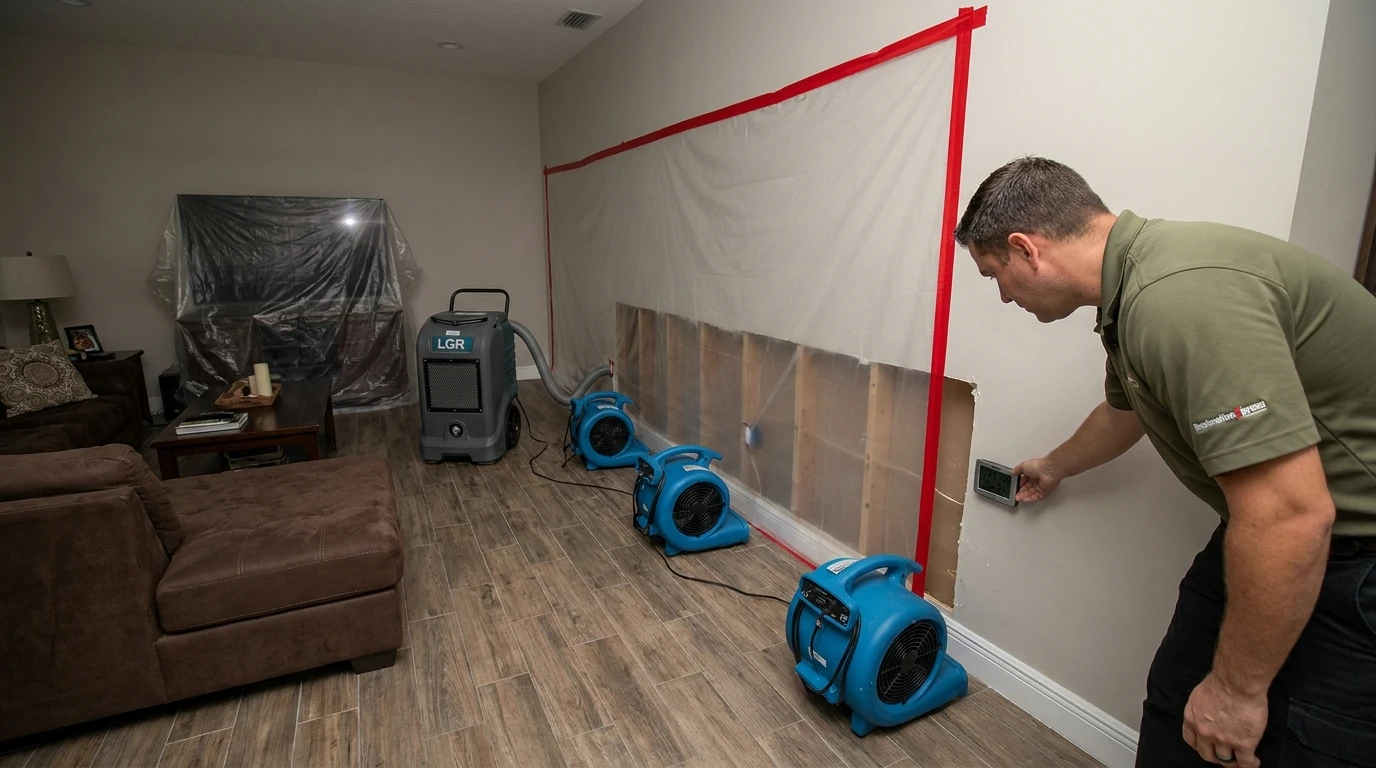
Drying equipment, air movers and low-grain-refrigerant (LGR) dehumidifiers, goes in next, sized to the square footage and the amount of wet material, not a flat number of units per room. The crew returns daily (or every other day) to re-check meter readings and adjust equipment. Drying ends when readings match the dry standard set by the unaffected areas of the home, not a fixed number of days.
How long does burst pipe cleanup take?
Most single-room losses from a clean-water pipe break dry in three to five days with equipment running continuously. That’s the realistic range for a bathroom or kitchen where water stayed on tile or hard flooring and didn’t soak deep into framing.
The timeline stretches when water got into wall cavities, under cabinetry, or beneath hardwood. Expect five to ten days if drywall needs to stay open for air movement, or if the loss hit more than one room. Older homes in neighborhoods like Pine Island Ridge or Rolling Hills, where plumbing and subfloor materials have had decades to age, sometimes run longer because water wicks further into porous materials before anyone notices the leak.
Two things stretch the timeline beyond the equipment itself: delayed response (water that sat for 48+ hours before anyone called for help wicks further and takes longer to pull back out) and insurance approval delays if an adjuster needs to inspect before demo starts.
Which materials get torn out, and which get dried in place?
The decision comes down to the water’s category and how long the material was saturated, not a blanket rule. Clean water (Category 1) from a supply-line break can often be dried in place if addressed within 24 to 48 hours; water that sat longer, or came from a fixture that backs up with contaminants, usually requires removal.
Drywall below the waterline typically comes out if it was submerged or wicking for more than a day or two, since wet gypsum board holds moisture a dehumidifier can’t fully pull out and provides a food source for mold. Baseboards almost always come off, since they trap water behind them even after the visible surface looks dry. Solid hardwood often has to be removed and replaced if it cupped; engineered flooring and tile usually survive if dried quickly. Insulation in exterior walls is rarely salvageable once wet; it holds water and loses its R-value.
This is also where the IICRC’s S500 water damage restoration standard matters in practice: it’s the industry reference crews use to classify the water and decide drying versus removal, rather than guessing room by room.
Who do you call for burst pipe cleanup?
For burst pipe cleanup in Davie, Fort Lauderdale, or the surrounding Broward County area, a licensed water damage restoration company that documents moisture readings at every visit is who you want on the job, not just a plumber or a handyman with a fan. The plumber fixes the pipe; the restoration crew handles everything the water touched after that. RestorationXpress, based in Davie, is IICRC-trained and available 24/7, and documents readings throughout the job for the insurance file.
If you’re closer to the coast, our Fort Lauderdale water damage restoration page covers area-specific response details for that side of the county.
What should you do next?
If water is still actively drying in your home right now, the next right move is getting a moisture assessment started today, not waiting to see if it “airs out” on its own. A same-day assessment gets equipment running sooner, and it gives you a written moisture log that insurance adjusters actually want to see.
Call RestorationXpress at (954) 932-5420 to schedule a same-day assessment, or request a water damage estimate through our contact page.
Most burst pipe cleanups that drag on for weeks got there because drying stopped too early or no one ever confirmed the wall cavities were actually dry. A structured sequence, extraction, mapping, selective demo, monitored drying, clearance testing, is what keeps a pipe break from becoming a mold remediation job six weeks later.
About RestorationXpress
This company has served Davie, FL and Broward County since 2011 (license #1057), handling water damage restoration, flood damage, storm damage, fire and smoke damage, and mold remediation. The team operates 24/7 and holds a 4.9-star rating across 134 Google reviews. Crews document moisture readings at every visit so homeowners have a clear record for insurance.