
TL;DR: A mold inspection in South Florida typically costs $200 to $700, depending on whether it’s a visual-only walkthrough or includes air and surface sampling with lab analysis. A “free” inspection almost always comes from the same company hoping to sell you remediation, which Florida law treats as a conflict of interest on most jobs. A paid, independent assessment gets you an unbiased report you can use to scope the actual remediation work.
If you’ve got a musty smell in a bathroom in Pine Island Ridge or a water stain spreading across a ceiling near Shenandoah, you’re probably trying to figure out whether you have a real mold problem and what it’s going to cost just to find out. Before anyone touches a wall, you need a clear answer on what’s growing, where, and how far it’s spread, and that answer has a price tag separate from the cleanup itself.
How much does a mold inspection cost in South Florida?
Most homeowners in Broward County pay between $200 and $700 for a mold inspection, with the final number set by how much testing is involved. A basic visual inspection with a moisture meter costs less than one that adds air quality sampling and lab fees.
| Inspection type | Typical cost |
|---|---|
| Visual-only walkthrough, no lab samples | $200 - $350 |
| Visual inspection + 1-2 air quality samples | $300 - $550 |
| Full assessment: multiple rooms, air + surface swabs | $450 - $700 |
| Post-remediation clearance test | $250 - $450 |
| Lab analysis, per sample (often billed separately) | $40 - $150 |
These are typical South Florida ranges, not a quote. A licensed assessor sets the final price after seeing the property, the square footage affected, and how many samples the situation actually calls for.
What makes mold inspection cost go up or down?
The biggest cost driver is how many samples get collected and whether the job needs a lab to confirm what species you’re dealing with. A simple visible mold spot on a bathroom ceiling needs far less testing than a whole-house assessment after a slow roof leak.
A few things that push the price up: multiple affected rooms, crawlspace or attic access, testing both indoor and outdoor air for comparison (the standard way to judge if indoor spore counts are abnormal), and rush turnaround on lab results. Homes near Fort Lauderdale and Hollywood with waterfront humidity exposure, or older Davie homes with older HVAC systems, sometimes need a longer inspection simply because there’s more square footage and more hidden cavities to check with a moisture meter and borescope.
Things that keep it on the lower end: a single visible mold patch under 10 square feet, a recent, well-documented water event (so the cause is already known), and a homeowner who only needs a go/no-go answer rather than a full lab report.
Why shouldn’t the company that inspects also do the remediation?
Florida law separates these two jobs on purpose, and a company offering both on the same project is a real conflict of interest. The state licenses mold assessors and mold remediators as two distinct professions under the Department of Business and Professional Regulation, and in most cases a licensed assessor who writes the inspection report cannot turn around and perform the remediation work on that same property.
The logic is simple: an inspector who also profits from the cleanup has a financial incentive to find more mold than is actually there, or to recommend more extensive (and expensive) remediation than the job needs. An independent assessor has no stake in the remediation bid, so their protocol describes only what the property actually needs. You can verify any Florida mold assessor or remediator’s license status through the Florida Department of Business and Professional Regulation.
This is also the real answer behind “free mold inspection red flags.” A company offering a no-cost inspection is almost always a remediation contractor using the walkthrough as a sales visit, not a licensed assessor doing an independent assessment. The EPA’s own mold cleanup guidance recommends hiring a professional for anything beyond a small, isolated patch, specifically so you get an objective read on scope.
If you’re not sure whether what you’re looking at even needs lab testing, our guide on how to test for mold walks through DIY kits versus a professional assessment, and 7 signs you have hidden mold covers the smells and symptoms worth acting on before you call anyone.
What does a professional mold inspection actually involve?
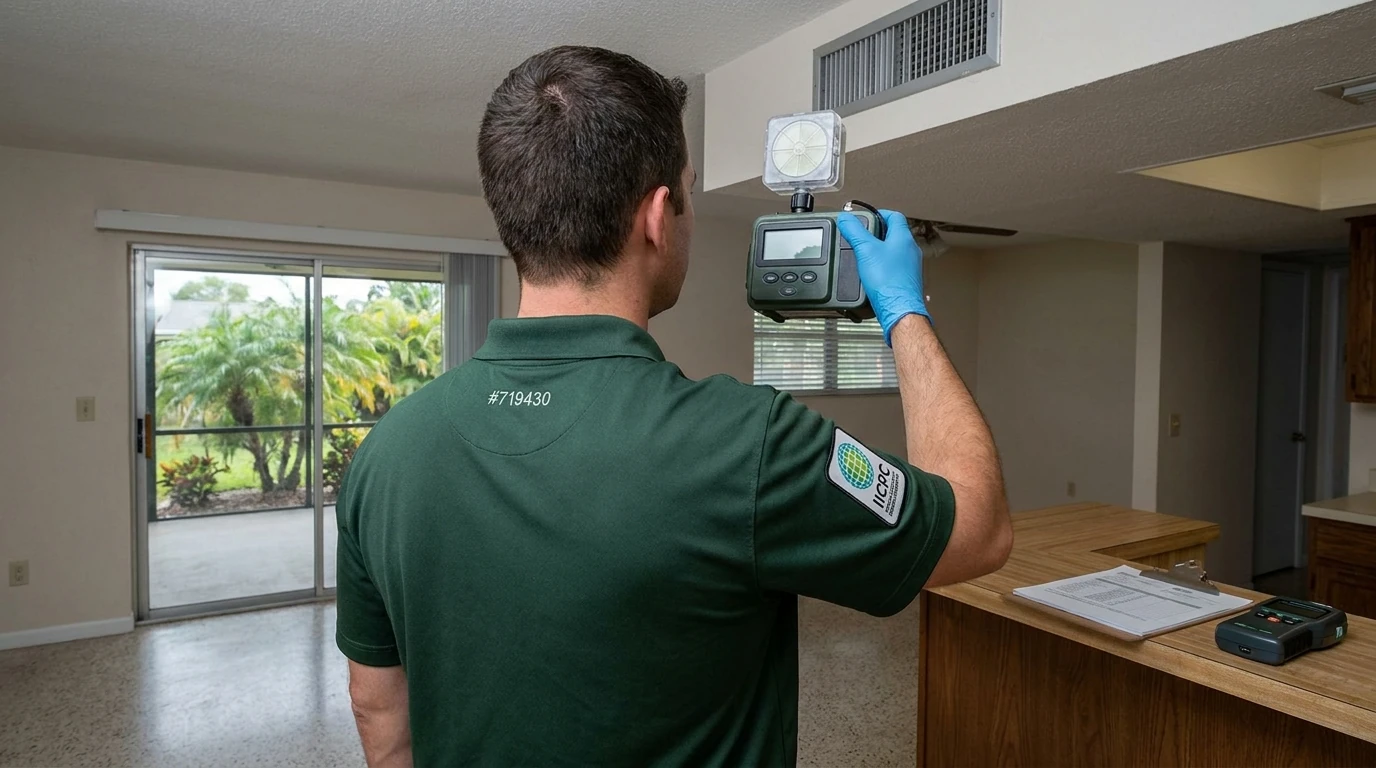
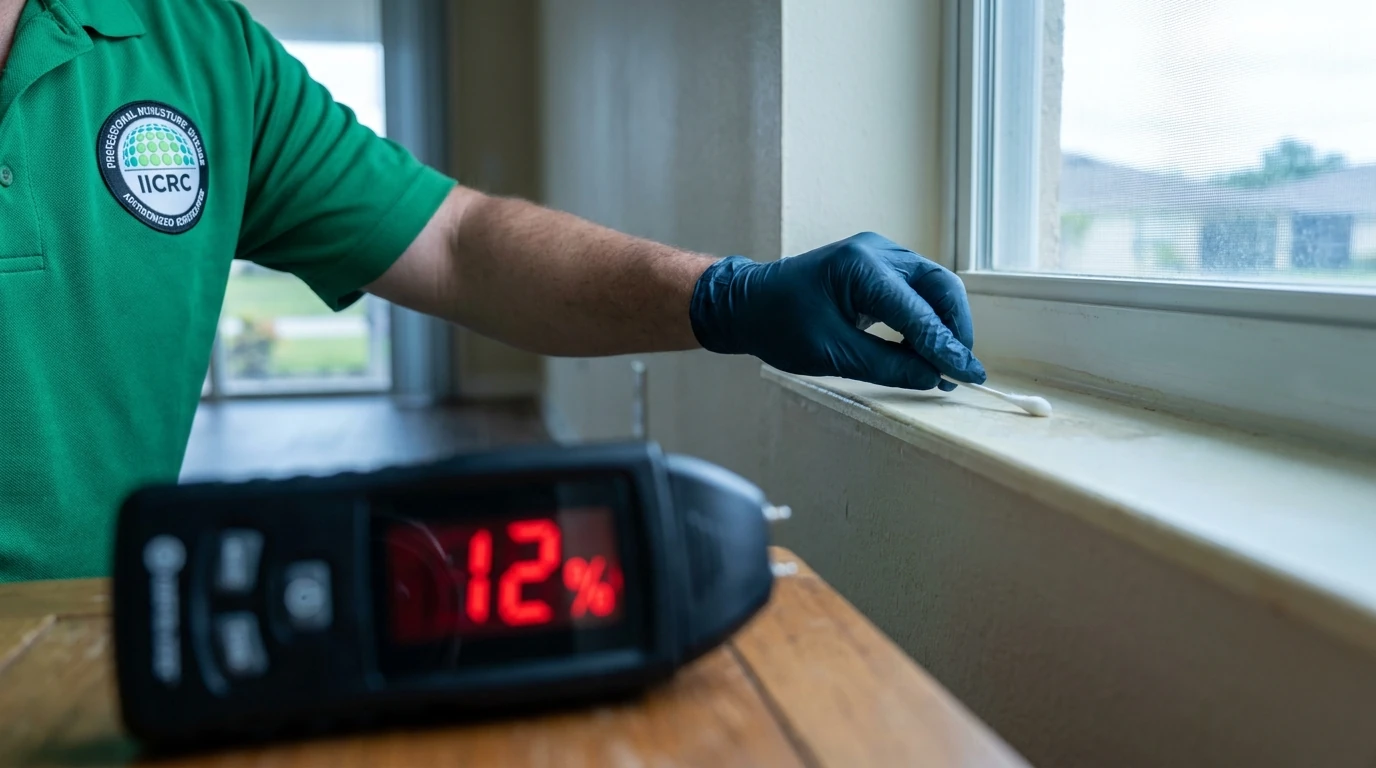
A real inspection combines a visual walkthrough, moisture mapping, and targeted sampling, not just a glance at a stained ceiling tile. The assessor documents conditions first, then decides what, if anything, needs lab confirmation.
- Visual assessment. The inspector checks visible growth, water stains, and areas prone to moisture, bathrooms, under sinks, around AC handlers, attic decking.
- Moisture mapping. A moisture meter reads drywall, baseboards, and subfloor to find damp areas that haven’t visibly molded yet but are close to it.
- Air and surface sampling (when warranted). Air pump cassettes capture spore counts indoors and outdoors for comparison; surface swabs confirm what’s growing on a specific material.
- Lab analysis and report. Samples go to a third-party lab, and the final report documents species, concentration, and a written remediation protocol, the scope document a remediation company then bids against.
That written protocol is what protects you. Without it, you’re trusting a remediation estimate with no independent benchmark to check it against.
What should you do next?
Start with an independent mold assessment before you accept any remediation bid, then use that written protocol to get quotes. If the inspection turns up active growth, RestorationXpress handles the remediation side under its own separate scope, built from your assessor’s documented protocol rather than a guess.
Once remediation is on the table, our mold remediation cost guide breaks down what Broward County homeowners actually pay for the cleanup itself.
A mold problem rarely gets smaller while you wait on it, especially in South Florida’s humidity. Getting an accurate, independent read on scope now is what keeps the eventual remediation bill from growing past what the job actually needs.
About RestorationXpress
RestorationXpress has served Davie, FL and the surrounding Broward County area since 2011 (license #1057). Their crews handle water damage restoration, fire damage restoration, mold remediation, storm damage restoration, flood damage restoration, and smoke damage restoration across Davie, Fort Lauderdale, Hollywood, Plantation, and nearby communities. The company holds a 4.9 rating across 134 Google reviews and answers calls 24/7.
Need help now? Call RestorationXpress at (954) 932-5420.