
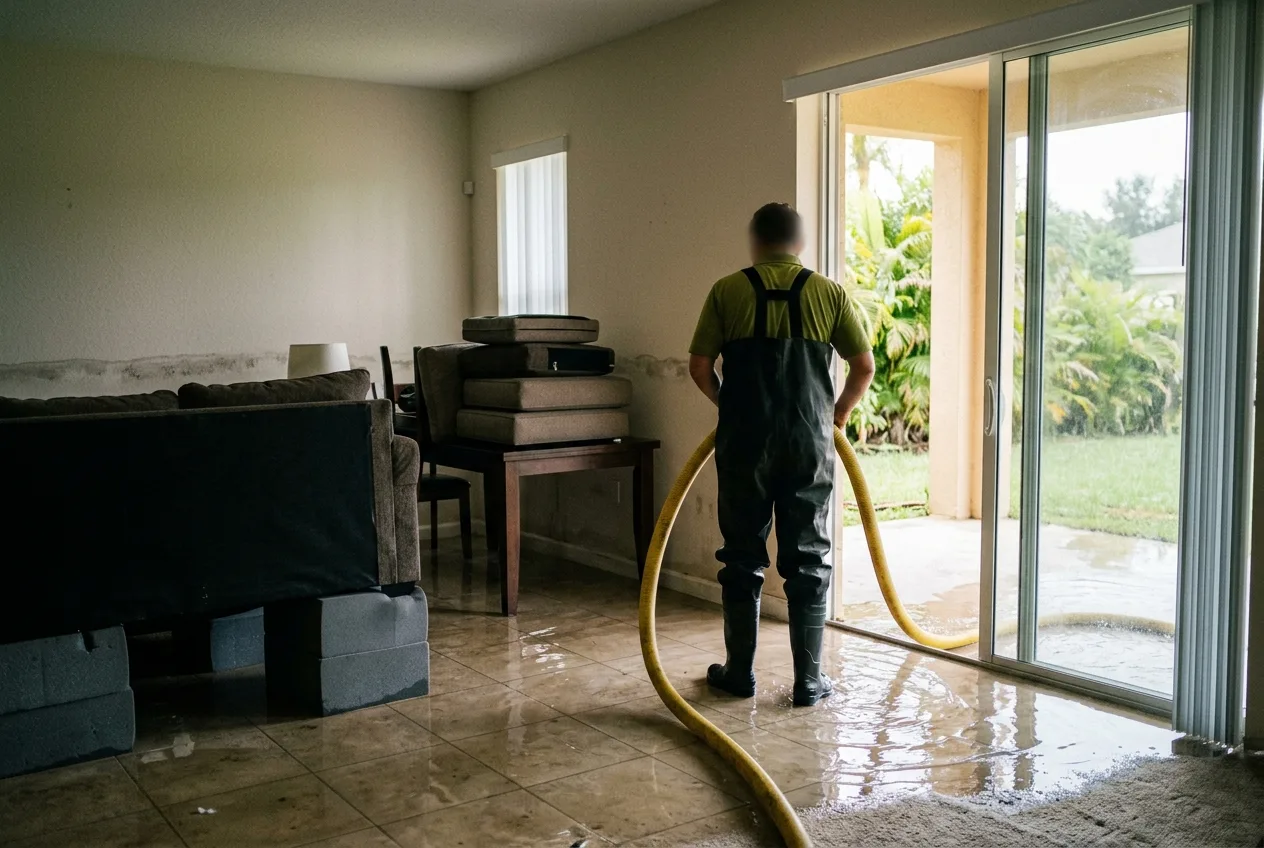
Emergency Flood Damage Restoration in Fort Lauderdale
Emergency flood damage restoration in Fort Lauderdale, FL. Insurance billing accepted. Call (954) 932-5420.
Our technicians are dispatched from our Davie, FL headquarters and are typically on-site in Fort Lauderdale within 60 minutes of your call.
Flooding emergency in Fort Lauderdale? Call now for emergency service. Our crew responds fast to pump out the water and stop the damage from spreading.
Fort Lauderdale sits at sea level on a limestone shelf that drains slowly, and when a tropical system stalls over Broward County, that geography turns living rooms into wading pools faster than most homeowners expect. The waterfront streets of Las Olas Isles and Rio Vista flood not just from storm surge but from the city’s aging stormwater infrastructure backing up beneath the streets. When the water is already inside your walls, every hour of delay adds to the drying timeline and the repair bill. RestorationXpress operates out of Davie, just minutes from the Fort Lauderdale city limits, and can schedule prompt response to properties throughout the area.
Why Fort Lauderdale Properties Are Especially Vulnerable to Flood Damage
The same features that make Fort Lauderdale one of the most desirable addresses in South Florida, the canals, the intracoastal access, the low-lying lots, are the exact conditions that accelerate flood damage. Homes built in neighborhoods like Coral Ridge and Victoria Park in the 1950s and 1960s were constructed on slabs with minimal elevation above the water table. When a heavy rain event or hurricane-season surge pushes water under a slab, it wicks upward through concrete and into flooring systems that were never designed to handle saturation.
Florida’s subtropical humidity compounds the problem. Even after standing water is removed, ambient moisture levels in Fort Lauderdale regularly exceed 70%, enough for mold colonies to begin establishing within 24 to 48 hours on wet drywall, insulation, and subflooring. That window is not a scare tactic; it is the documented timeline in the IICRC S500 standard for water damage response, and it shapes every decision made on a flood job here.
Our Flood Damage Restoration Process in Fort Lauderdale
The first priority on any flood call is stopping ongoing water intrusion if the source is still active, a failed seawall, an overwhelmed sump, or a storm drain backflow. Once the water source is controlled, the extraction phase begins using truck-mounted and portable extraction units capable of pulling hundreds of gallons from carpet, hardwood, and tile grout lines.
After bulk extraction, the drying phase is where Fort Lauderdale jobs diverge from work done in drier climates. The outdoor dew point here routinely sits above 70°F during summer months, which means simply opening windows does nothing, it introduces more moisture than it removes. Industrial desiccant and refrigerant dehumidifiers are placed in a calculated pattern based on the square footage and the building’s layout, and readings are logged daily using calibrated moisture meters and thermal imaging cameras. Structural materials are not signed off as dry until they hit the target moisture content for their material class, not when they feel dry to the touch.
For homes near Fort Lauderdale Beach or along the ZIP codes in the 33304 and 33301 corridors, saltwater intrusion from surge events adds a layer of remediation: salt residue is corrosive to metal fasteners, electrical components, and HVAC systems and must be flushed and treated before reconstruction begins.
Fort Lauderdale Insurance Coordination
Flood damage claims in Fort Lauderdale almost always involve the National Flood Insurance Program (NFIP) rather than a standard homeowner’s policy, because most private carriers exclude rising water. The documentation requirements for NFIP claims are specific: adjusters want moisture readings at multiple structural layers, photo evidence of the water line, and itemized scope of work tied to line items the program recognizes.
The team at RestorationXpress documents losses in a format that aligns with what NFIP adjusters and independent insurance adjusters expect to see, which reduces the back-and-forth that can delay your claim settlement. If your property is governed by an HOA, common in the condo towers along Fort Lauderdale Beach and the planned communities in the 33308 ZIP code, we can coordinate directly with property managers on scope approvals before work begins.
Local Note: What Fort Lauderdale’s Limestone Substrate Means for Drying
One detail that surprises homeowners in neighborhoods like Colee Hammock is how long concrete slabs here retain moisture compared to slabs in inland Florida cities. The oolitic limestone that underlies much of Broward County is porous, and slabs poured directly on it, common in pre-1980 construction, can hold measurable moisture for weeks after a flood event even when the surface appears dry. Rushing to reinstall flooring before the slab reaches equilibrium moisture content leads to buckled hardwood, failed tile adhesive, and trapped moisture that feeds mold from below. On Fort Lauderdale jobs, slab readings are taken at multiple points across the floor plan, not just at the perimeter, before any flooring reinstallation is approved.
If your Fort Lauderdale home or investment property has taken on water, whether from a hurricane-season surge, a canal overflow, or a storm drain backup, call RestorationXpress at (954) 932-5420 to schedule an assessment. The sooner extraction and drying equipment is in place, the narrower the gap between a remediation job and a full reconstruction project.
Serving Fort Lauderdale from our Davie headquarters — ★ 4.9 · 138 Google reviews
“Professional and friendly, the most reliable people.” — Alec, October 2026
Flood Damage Restoration in Fort Lauderdale: Service Coverage
Frequently Asked Questions
How fast can you arrive for flood damage restoration in Fort Lauderdale?
How quickly can RestorationXpress reach Las Olas Isles or Rio Vista after a flood call?
Does Fort Lauderdale's NFIP flood zone designation affect how a restoration claim is filed?
Are older homes in Victoria Park or Coral Ridge at higher risk for hidden flood damage?
What happens if saltwater from a storm surge reached my Fort Lauderdale home?
How long does flood drying typically take for a Fort Lauderdale home?
Will my homeowners insurance cover flood damage restoration in Fort Lauderdale?
Flood Damage Restoration response in Fort Lauderdale
Most Fort Lauderdale calls see a technician on-site within 60 minutes from our Davie headquarters.