Industrial Restoration in Davie
Industrial restoration in Davie and surrounding areas. Insurance billing accepted. Call (954) 964-6471.
Industrial facility down because of water, fire, or equipment failure? Call now for emergency service at (954) 964-6471 to get a crew scoping the damage before it spreads to adjacent production lines, inventory, or structural steel.
A burst process line, a sprinkler head that discharges in a warehouse rack system, or a electrical fire in a control panel doesn’t behave like residential damage. Industrial restoration in Davie means managing large open floor plates, concrete slab-on-grade construction, high-bay racking, and often specialized equipment that can’t simply be unplugged and dried with a box fan. The stakes are different too: every hour a plant or distribution center is offline is lost throughput, not just a damaged room.
What industrial restoration actually involves
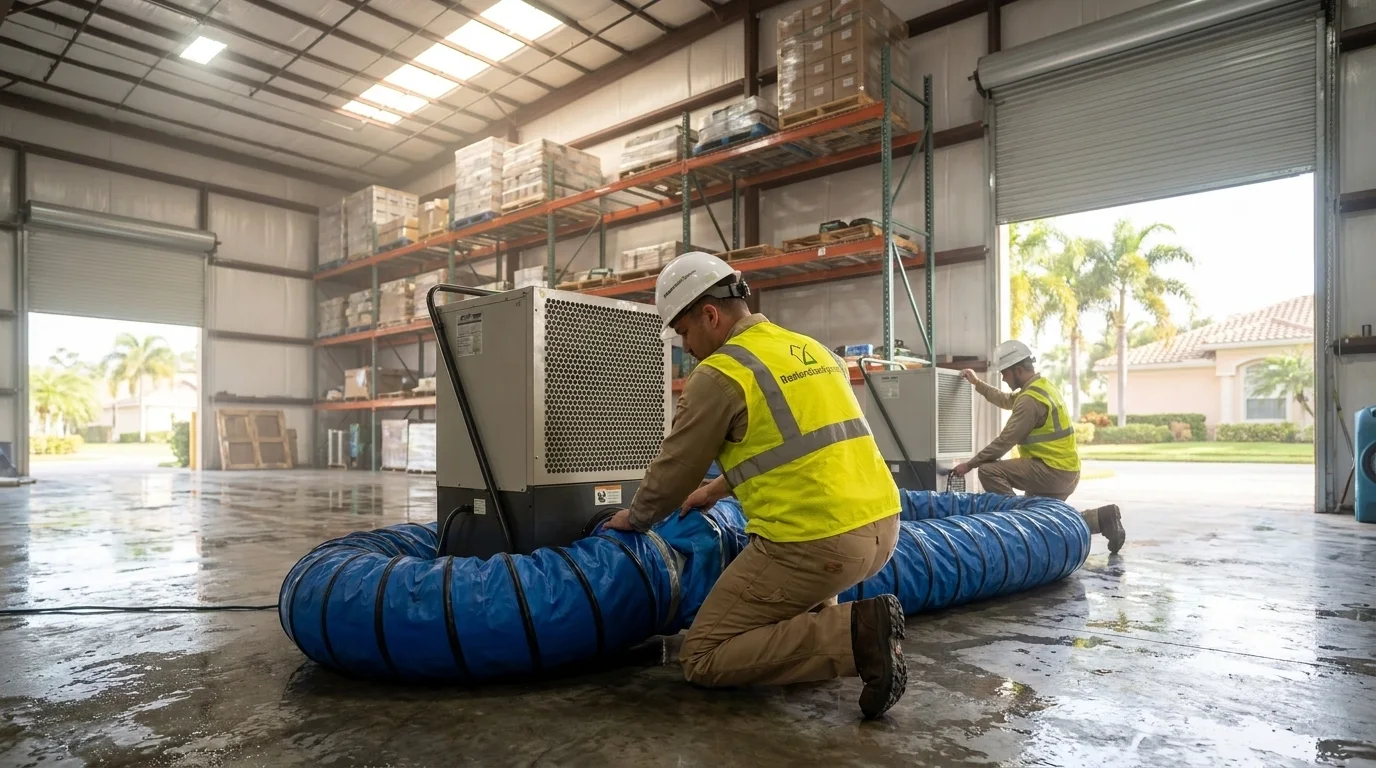
Industrial water damage and industrial fire damage respond differently than a house fire or a residential pipe burst, mostly because of scale and the materials involved. A 40,000 square foot warehouse with water under racking needs moisture mapping across a much larger footprint, often with infrared cameras and penetrating meters run on a grid rather than a handful of spot checks. Manufacturing facility restoration adds another layer: machinery, conveyor systems, and electrical panels that may need to be de-energized, assessed by an electrician, and dried or cleaned before anyone restarts production. Plant restoration services frequently involve coordinating around shift schedules and safety protocols that a homeowner job never touches, since the facility may need partial areas returned to service while work continues elsewhere.
Timelines run longer than residential jobs. Where a flooded bedroom might dry in three to five days, a warehouse with water trapped under epoxy-coated concrete or inside wall cavities of tilt-up panel construction can take substantially longer to bring back to a stable moisture content, especially if the slab itself has absorbed water.
Our process
- Facility walk and hazard assessment. Before any equipment goes in, we identify electrical hazards, structural concerns, and areas that need to stay isolated from active operations.
- Moisture or damage mapping across the full footprint. For water losses, that means grid-based readings on slab, walls, and racking supports. For fire losses, it means characterizing soot type and smoke penetration by zone, since synthetic materials in warehouse storage burn differently than wood pallets or paper stock.
- Targeted extraction, drying, or soot removal by zone. Rather than treating the whole facility as one job, we section it so operational areas can resume sooner while affected zones continue drying or cleaning.
- Monitoring and documentation. Daily or periodic moisture readings, photos, and logs that match what insurance adjusters and facility managers both need to track progress and close out the claim.
- Final clearance and handoff. Readings confirmed against dry standard, affected materials addressed, and a written summary of what was done for the facility’s records.
What separates a good industrial restoration response from a bad one
The most common mistake on industrial jobs is treating them like an oversized residential loss. Crews without industrial experience under-equip for the square footage, pull out drying equipment too early because surface readings look fine, or miss water that’s tracked under slab expansion joints and into adjacent rooms through wall penetrations for conduit and plumbing.
A second common gap is poor documentation. Insurance adjusters on commercial and industrial claims expect zone-by-zone moisture logs, photos tied to a floor plan, and a clear record of what equipment ran where and for how long. Jobs that skip this step tend to run into disputes over scope and duration later. Good operators also loop in the facility’s own safety officer or maintenance lead early, since industrial sites often have lockout-tagout requirements or hazardous materials storage that changes how a job has to be approached.
On fire losses specifically, soot from synthetic materials common in packaging, insulation, and plastics storage is harder to remove than soot from natural materials, and it can corrode metal racking and electrical contacts if left too long. Identifying that early changes both the cleaning method and the timeline.
What does industrial restoration cost?
Industrial restoration costs vary more than residential jobs because facility size, the type of loss, and how much of the operation needs to stay functional during the work all factor in heavily. The ranges below reflect typical industry figures for comparable commercial and industrial losses, not a quote. Every facility and loss is different, which is why RestorationXpress provides a written scope of work before any work begins. Commercial property insurance typically covers sudden water and fire losses to the structure and sometimes business interruption, but policy language varies widely by carrier and endorsement.
| Scenario | Typical range |
|---|---|
| Small warehouse section, clean water, under 2,000 sq ft | $3,500 - $9,000 |
| Large warehouse floor, water under racking, 10,000+ sq ft | $15,000 - $45,000 |
| Manufacturing floor with equipment affected | $20,000 - $75,000+ |
| Localized fire, single zone or panel | $8,000 - $25,000 |
| Full facility fire and smoke remediation | $50,000 - $200,000+ |
| Moisture monitoring and documentation only | $1,500 - $4,000 |
Seasonal & regional considerations
Davie’s wet season brings heavy, fast-moving rain and higher humidity for months at a time, which slows drying on large industrial floor plates and makes secondary moisture problems more likely if a roof or dock door seal fails during a storm. Flat commercial roofs common on area warehouses are also more prone to ponding during intense rain events, which is a frequent source of industrial water intrusion we see tied to roof drains and parapet flashing rather than plumbing failures.
Service area
RestorationXpress handles industrial restoration for facilities in Davie and the surrounding Broward County area, including warehouse, distribution, and manufacturing properties in neighboring commercial corridors.
If a facility is dealing with water, fire, or smoke damage, get a scope of work started now so production downtime stays as short as possible. Call (954) 964-6471 to begin an industrial restoration assessment.
Frequently Asked Questions
Does commercial property insurance cover industrial water or fire damage?
How is drying a warehouse floor different from drying a residential room?
Can part of a facility stay operational while restoration work is happening?
Why does soot from a warehouse fire need different treatment than a house fire?
What documentation do you provide for an industrial claim?
Looking for the best industrial restoration company in Davie?
RestorationXpress provides licensed and insured industrial restoration in Davie, FL and the surrounding area, and has served local property owners since 2011. Customers rate us 4.9 out of 5 stars across 137 Google reviews. We answer calls 24/7 — call (954) 932-5420 for immediate help.
Need Industrial Restoration now?
We respond 24/7 across Davie and surrounding FL cities.