Emergency Sewage Cleanup and Sanitization in Davie
Emergency sewage cleanup and sanitization in Davie and surrounding areas. Insurance billing accepted. Call (954) 964-6471.
Raw sewage backing up through a drain, toilet, or floor cleanout? Call RestorationXpress now for emergency sewage cleanup. Sewage intrusion is a different animal from a clean water leak: it carries bacteria, viruses, and parasites that start contaminating porous materials within hours, and the longer wastewater sits on flooring, drywall, or subfloor, the more has to be removed rather than dried. This page covers what sewage cleanup and sanitization actually involves in Davie, FL, what a thorough response looks like, and where costs typically land.
What sewage cleanup and sanitization actually involves
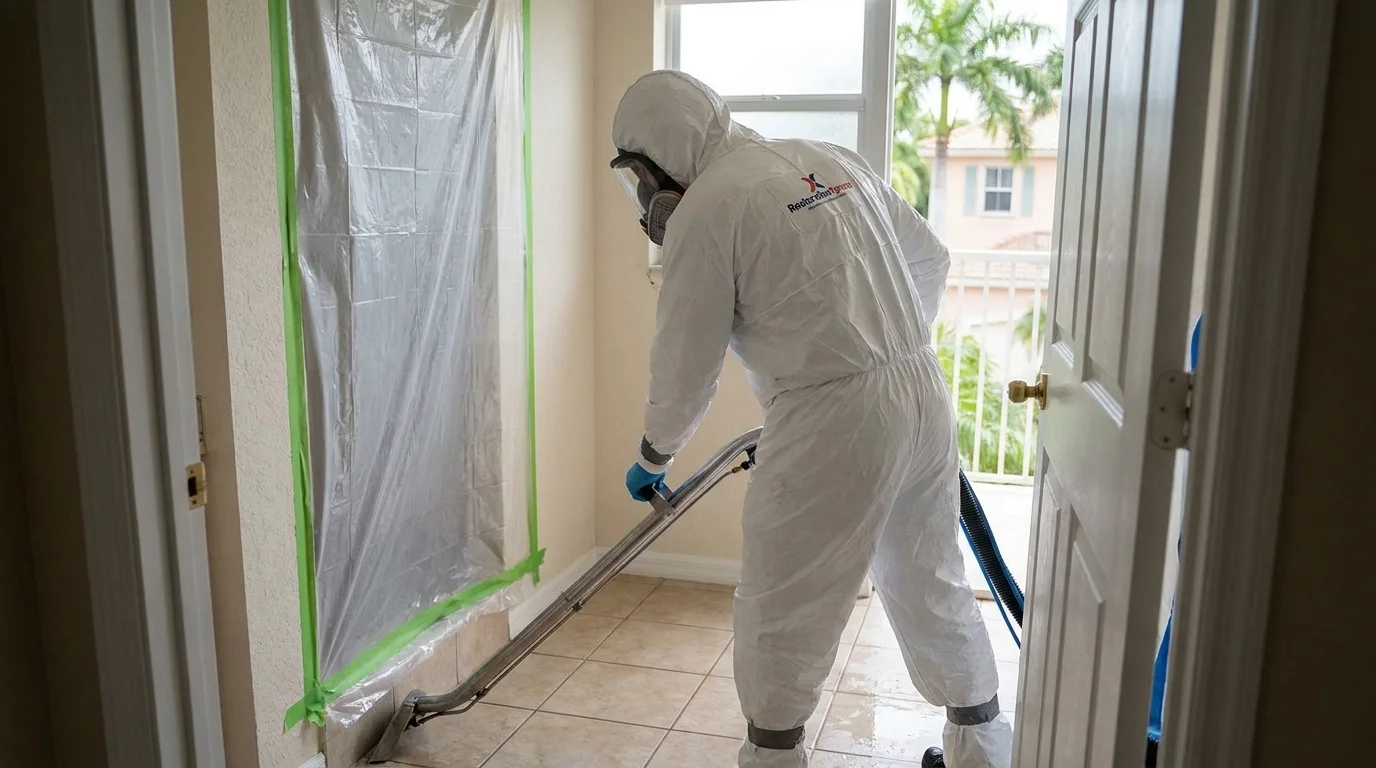
A sewage backup can come from a sewer line clog, a septic system overflow, a failed sump pump, or a municipal line surcharge during heavy rain, and each source changes how the cleanup is scoped. Technicians classify the loss as Category 3 water, meaning anything porous that absorbed contaminated water, carpet pad, baseboard, drywall below the waterline, insulation, is typically removed rather than dried in place. The work includes pumping or extracting standing wastewater, removing and bagging contaminated materials for disposal, cleaning and disinfecting all affected hard surfaces, and running air movers and dehumidifiers to bring the structure back to a normal moisture range. Depending on how far the water traveled and how long it sat, sanitization can take anywhere from a single day to several, with air quality and odor control checked before the space is called complete.
Our process
- Source and containment check. Before anything is touched, we confirm the backup has stopped or the line has been cleared, and we contain the affected area to keep contaminated water from spreading to clean rooms.
- Raw sewage removal and extraction. Standing wastewater and solid waste are pumped and extracted using equipment dedicated to contaminated water, never the same tools used on clean-water jobs.
- Contaminated material removal. Carpet, pad, baseboard, and other porous materials touched by sewage are removed and disposed of per waste-handling standards, since these materials cannot be reliably disinfected.
- Cleaning and enzymatic treatment. Remaining hard surfaces, framing, and subfloor are cleaned and treated with hospital-grade disinfectants and enzymatic treatments that break down organic residue, not just mask odor.
- Drying, monitoring, and odor verification. Air movers and dehumidifiers run until moisture readings in the affected structure return to normal, with a final check for lingering odor before the job is signed off.
What separates a good sewage cleanup response from a bad one
The biggest mistake in sewage cleanup is treating it like a water damage job: drying contaminated carpet instead of removing it, or disinfecting the surface of a wall without checking how far wastewater wicked up the drywall and insulation behind it. A thorough response documents the category and source of the water, photographs the extent of contamination before removal, and keeps a waste disposal record, all of which insurance adjusters look for when they review a sewage claim. Odor that returns a few days after cleaning is usually a sign that contaminated material was dried instead of removed, or that subfloor and wall cavities were never opened up to check for hidden saturation. A good crew also tests air quality and moisture levels before closing out the job rather than relying on a visual check alone.
What does sewage cleanup and sanitization cost?
Every sewage loss is different depending on how much wastewater intruded, how far it traveled, and how long it sat before cleanup started, so RestorationXpress provides a written scope of work before any work begins. Homeowners insurance often covers sudden and accidental sewage backups under a standard policy, though many carriers require a separate sewer backup endorsement, so it’s worth checking your policy or asking us to help confirm coverage. Typical industry ranges look like this:
| Scenario | Typical range |
|---|---|
| Small bathroom backup, hard surfaces only | $600 - $1,800 |
| Single room, carpet and baseboard removal | $1,800 - $4,500 |
| Multi-room backup, subfloor affected | $4,500 - $9,000 |
| Septic overflow across finished basement or living area | $8,000 - $18,000 |
| Sewer line backup with structural material removal | $10,000 - $25,000+ |
Seasonal & regional considerations
South Florida’s rainy season puts real strain on aging sewer lines and septic systems throughout Davie and Broward County, and heavy downpours can push municipal lines to capacity, sending wastewater back through the lowest drains in a home. Properties on septic systems are also more prone to overflow when the water table rises after extended rain, since saturated drain fields have nowhere to send effluent. Homes with older cast iron or clay sewer laterals, common in neighborhoods built before modern PVC piping became standard, are more prone to root intrusion and line collapse that triggers a backup with little warning.
Service area
RestorationXpress responds to sewage backups and septic overflow cleanup throughout Davie, FL, and nearby communities including Cooper City, Pembroke Pines, Plantation, and Weston.
If wastewater is backing up into your home or business, don’t wait for it to sit. Call RestorationXpress to begin raw sewage removal and sanitization before contamination spreads further into your home.
Frequently Asked Questions
Does homeowners insurance cover sewage backup cleanup?
Why does contaminated carpet usually get removed instead of cleaned?
How is a septic overflow different from a sewer line backup?
What should I avoid doing before cleanup crews arrive?
How do you confirm a space is fully sanitized and safe to use again?
Looking for the best sewage cleanup and sanitization company in Davie?
RestorationXpress provides licensed and insured sewage cleanup and sanitization in Davie, FL and the surrounding area, and has served local property owners since 2011. Customers rate us 4.9 out of 5 stars across 138 Google reviews. We answer calls 24/7 — call (954) 932-5420 for immediate help.
Need Sewage Cleanup and Sanitization now?
We respond 24/7 across Davie and surrounding FL cities.