
Water Leak Detection in Davie
Water leak detection in Davie and surrounding areas. Insurance billing accepted. Call (954) 964-6471.
Water leak detection in Davie often starts with a small clue: a water bill that jumped for no clear reason, a warm spot on the slab, a musty smell near a baseboard, or the faint sound of water moving somewhere behind drywall when the house is quiet. By the time any of these signs show up, the leak has usually been running for days or weeks, hidden inside a wall cavity, under tile, or beneath the slab itself. Finding it without tearing the house apart is the entire point of leak detection, and it’s a different skill set than fixing the plumbing once the source is known.
What water leak detection actually involves
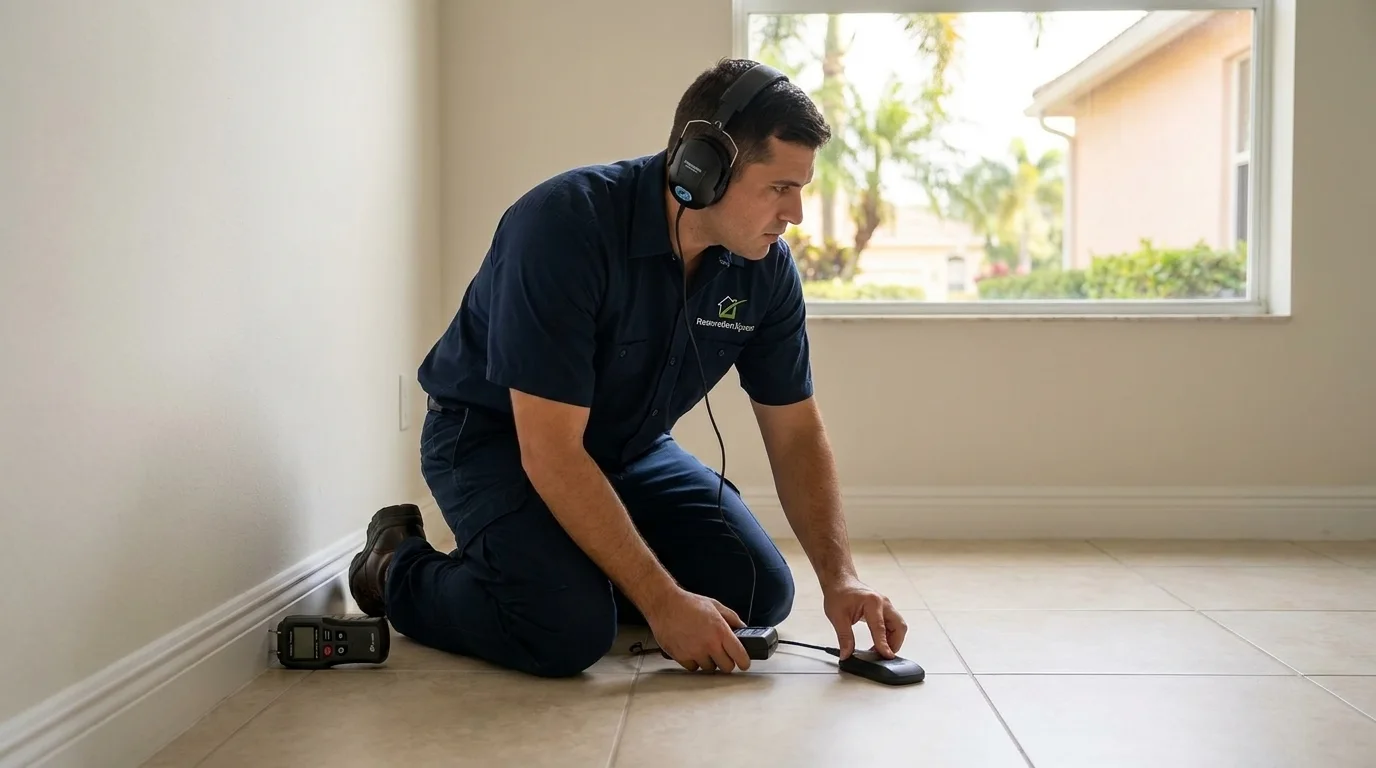
Leak detection is a diagnostic process, not a repair. The goal is to locate the exact point where water is escaping a supply line, drain line, or fixture without guessing or opening walls at random. Techs use a combination of acoustic listening devices that pick up the sound of pressurized water escaping a pipe, thermal imaging cameras that read temperature differences in flooring and drywall where water has traveled, and moisture meters that confirm wet versus dry materials at a given depth. For slab leaks specifically, this often means tracing hot or cold water lines run under the concrete foundation, which is common in South Florida homes built on slab-on-grade construction. A typical inspection takes one to a few hours depending on the size of the home and whether the leak is active or intermittent.
Our process
- Interview and visual inspection. We start by asking what’s been noticed: higher water bills, sounds, damp spots, or visible damage, and do a walkthrough of the affected areas.
- Non-invasive scanning. Acoustic equipment and thermal imaging are used first to narrow down the leak’s general location without cutting into anything.
- Moisture mapping. Meters confirm which materials are actually wet and to what depth, which helps distinguish a fresh leak from an old, already-dried stain.
- Pinpointing the source. Once the general zone is identified, we isolate the exact point of failure, whether it’s a pinhole in a copper line, a failed slab joint, or a cracked drain fitting.
- Documentation and next steps. You get a clear written explanation of what was found and where, which you can hand to a plumber for repair or use for an insurance claim if damage has already occurred.
What separates a good leak detection response from a bad one
The most common mistake is treating leak detection as guesswork: cutting open drywall or breaking slab in multiple spots hoping to get lucky. That approach costs the homeowner more in repair and patching than the leak itself, and it doesn’t always find the source. A careful detection process narrows the search before anything gets opened, which matters most on slab leaks, where unnecessary concrete demolition is expensive and disruptive. Insurance adjusters also pay attention to how a leak was found and documented. Clear notes on equipment used, readings taken, and the confirmed point of origin support a claim far better than a vague description of “water damage found.” A good operator also checks for secondary moisture, meaning they don’t stop at the first wet spot if there’s reason to believe water has traveled further through a wall cavity or subfloor.
What does water leak detection cost?
Costs vary based on the type of leak, how accessible the pipe is, and whether the leak is under a slab, inside a wall, or part of a more complex plumbing run. These are typical industry ranges, not a quote, and every property is different, which is why RestorationXpress provides a written scope before any work begins. Homeowners insurance often covers the resulting water damage once a leak is found, though the detection and plumbing repair itself may or may not be covered depending on the policy, so it’s worth checking with your carrier directly.
| Scenario | Typical range |
|---|---|
| Basic inspection, single fixture or area | $200 - $450 |
| Whole-house leak survey | $400 - $800 |
| Slab leak detection | $450 - $900 |
| Leak detection with thermal imaging and moisture mapping | $500 - $1,000 |
| Complex or intermittent leak requiring multiple visits | $800 - $1,500 |
Seasonal & regional considerations
Davie’s slab-on-grade construction and shifting, sandy soil make slab leaks more common here than in areas with basements or crawl spaces, since ground movement and soil settling can stress pipes running beneath the foundation over time. South Florida’s high humidity also means a hidden leak can lead to mold growth faster than in drier climates, often within 24 to 48 hours of sustained moisture, which is part of why early detection matters more here than it might elsewhere. Heavy rain season can also mask small leaks, since homeowners sometimes assume a damp spot is just rain intrusion rather than an internal plumbing issue.
Service area
RestorationXpress provides water leak detection throughout Davie and the surrounding communities, including Cooper City, Southwest Ranches, Plantation, and Weston. Housing stock across this part of Broward County runs from older slab homes to newer construction, and the detection approach adjusts accordingly, whether that means tracing copper lines under an older slab or checking PEX runs in a newer build.
If something feels off with your water bill, your floors, or a wall that’s warmer or cooler than it should be, don’t wait for it to get worse. Call RestorationXpress at (954) 964-6471 to schedule a leak detection inspection and get a clear answer on what’s happening before it turns into a bigger repair.
Frequently Asked Questions
Does homeowners insurance cover water leak detection?
How do you find a leak without cutting into walls or flooring?
What are the signs of a slab leak specifically?
How long does a leak detection inspection take?
Can a leak be present even if I don't see any visible water?
Looking for the best water leak detection company in Davie?
RestorationXpress provides licensed and insured water leak detection in Davie, FL and the surrounding area, and has served local property owners since 2011. Customers rate us 4.9 out of 5 stars across 138 Google reviews. We answer calls 24/7 — call (954) 932-5420 for immediate help.
Need Water Leak Detection now?
We respond 24/7 across Davie and surrounding FL cities.