
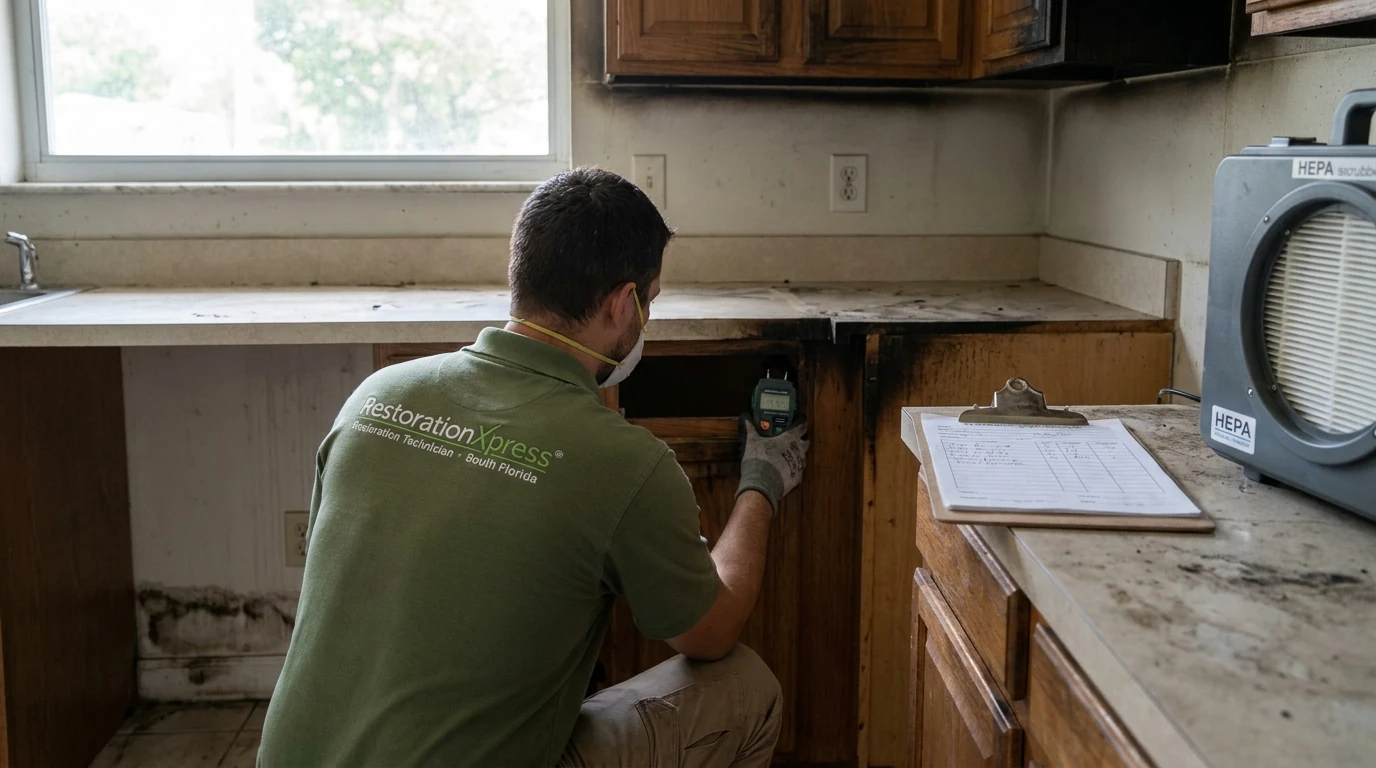
TL;DR: Fire damage restoration in Florida typically runs from $500 for smoke-only cleanup to $150,000 or more for a full structural rebuild, with most moderate house fires landing between $15,000 and $50,000. The final number depends on how deep the soot and heat penetrated, whether firefighting water caused secondary damage, and how much of the structure needs rebuilding versus cleaning. A standard homeowners policy usually covers most of it, minus the deductible.
If fire crews just cleared your home near Pine Island Ridge or Shenandoah and you’re staring at soot-streaked walls, warped cabinets, and a smoke smell that won’t quit, the real question isn’t “how do I fix this,” it’s “what is this going to cost.” The honest answer is a wide range, because a contained kitchen grease fire costs nothing like a fire that burned through the attic and triggered a permitted rebuild. Here’s what actually moves that number, what a typical Broward County claim looks like, and when the repair bill becomes an insurance conversation instead of a credit card decision.
How Much Does Fire Damage Restoration Cost?
Fire damage restoration typically costs between $500 for light smoke cleanup and $150,000 or more for a full structural rebuild, with most single-family fires landing in the $15,000 to $50,000 range once smoke, soot, and the water used to put the fire out are all addressed.
That range is wide because “fire damage” covers two very different jobs. One is cleaning: removing soot, neutralizing odor, and treating surfaces so smoke damage doesn’t keep off-gassing. The other is a full fire damage restoration scope that includes demolition, structural drying, and reconstruction. Most real claims involve some of both.
| Scenario | Typical Cost Range |
|---|---|
| Smoke odor only, no structural damage | $300 - $1,500 |
| Soot cleanup, single room | $500 - $3,000 |
| Fire and smoke damage, 1-2 rooms | $5,000 - $15,000 |
| Multi-room fire with structural damage | $15,000 - $50,000 |
| Major fire requiring reconstruction | $50,000 - $150,000+ |
These are typical industry ranges, not quotes. Every fire burns differently, and the only way to get a real number is a written scope from whoever inspects the property.
What Drives Fire Damage Restoration Costs Up or Down?
The price moves with how deep smoke and heat penetrated the structure and whether firefighting water caused a second type of damage, not just how big the fire looked.
Factors that push cost up:
- Smoke type. Wet smoke from a smoldering fire (upholstery, plastics) leaves a sticky residue that penetrates porous materials deeper than dry smoke from a fast-burning wood fire, and it costs more to clean.
- HVAC contamination. If soot got pulled into the return air, the whole duct system usually needs cleaning or the smell comes back after the walls are done.
- Water damage from suppression. Every gallon the fire department used to knock down the fire is now standing water that has to be extracted and dried before rebuild starts.
- Square footage and ceiling height. Soot rises and settles on every horizontal surface in its path, so a two-story great room costs more to treat than a single bedroom.
- Code upgrades. A permitted rebuild in an older Broward County home can trigger current electrical or smoke-detector code requirements that weren’t there originally.
- Contents. Restorable items (clothing, some furniture) get cleaned off-site; everything else gets replaced, and replacement cost adds up fast.
How Much Does Smoke Damage and Soot Removal Cost on Its Own?
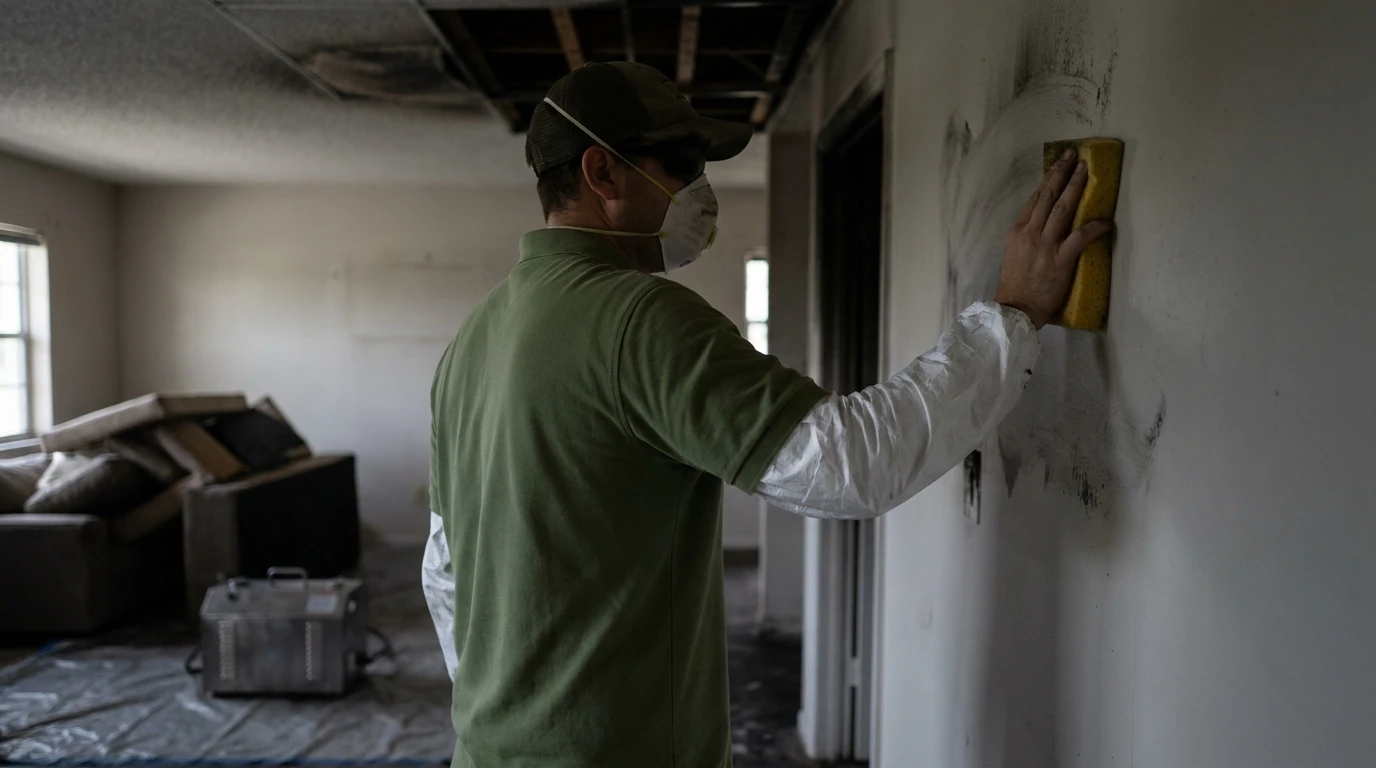
Smoke damage cleanup without structural fire damage typically costs $300 to $3,000 for a single affected room and up to $8,000 for whole-house odor remediation, depending on how far the smoke traveled and whether it reached the HVAC system.
Soot removal from hard, non-porous surfaces (tile, glass, sealed cabinetry) runs on the lower end, often $300 to $600 per room, because it’s mostly specialized wipe-down and degreasing. Odor removal is the part that costs more: thermal fogging, ozone treatment, or hydroxyl generators run for hours or days depending on how badly porous materials like drywall and carpet absorbed the smell. Professional smoke odor removal usually combines several of these methods because no single one gets every surface. We’ve broken down why DIY odor sprays usually fail in how professionals remove smoke odor, which is worth reading before you buy an ozone machine online.
Contents cleaning (a “pack-out” where furniture and belongings go to a cleaning facility) is billed separately and depends on volume, not square footage.
Does Homeowners Insurance Cover Fire Damage Restoration Cost?
Most standard homeowners policies cover fire damage restoration after the deductible, including structural repair, smoke and soot cleanup, and temporary living expenses, but how much actually gets paid often comes down to documentation and scope, not just the policy language.
Fire is one of the perils almost every homeowners policy covers by default, unlike flood, which usually needs a separate policy. Where claims get contentious is the scope: adjusters sometimes propose cleaning line items where a restoration contractor documents that materials need to be replaced instead, or vice versa. A detailed moisture and soot-penetration report, photos before any cleanup starts, and an itemized contents inventory all strengthen the claim. The Insurance Information Institute has a clear breakdown of how disaster claims typically get settled, including what to expect from the adjuster process. If you want a walkthrough specific to this market, filing a fire damage claim covers what South Florida adjusters usually ask for first.
Most policies also include Additional Living Expenses (ALE) coverage, which pays for temporary housing while the home is unlivable, usually for a defined period or dollar cap.
What Does the Fire Damage Restoration Process Involve?
Fire damage restoration moves through board-up and water extraction first, then soot and smoke removal, then structural drying and deodorization, and finally rebuild, with each phase documented separately for the insurance scope.
- Emergency board-up and tarping. Secures the property and stops weather or theft exposure the same day.
- Water extraction. Removes water used to fight the fire before it causes a second round of damage.
- Soot and smoke cleaning. Surfaces get cleaned using methods matched to the smoke type and material.
- Odor removal. Thermal fogging, ozone, or hydroxyl treatment, often repeated until air quality testing confirms it’s resolved.
- Structural drying. Dehumidifiers and air movers bring moisture content back to normal before any rebuild starts.
- Reconstruction. Drywall, flooring, cabinetry, and any code-required upgrades get rebuilt to close out the claim.
For the full breakdown of what happens at each stage and roughly how long it takes, the fire damage restoration process walks through it step by step. The National Fire Administration’s guide on recovering after a home fire is also a solid starting point for the first 24 hours, before any contractor is involved.
Who Should You Call After a Fire Near Davie?
A fire damage restoration crew should get the call before a general contractor does, because the first 24 to 48 hours determine whether smoke odor and secondary water damage become permanent problems instead of a clean-up job.
A Davie-based restoration team with a 4.9-star rating across 137 Google reviews and a 24/7 line can start the board-up and the insurance-scope documentation the same day, which matters because the longer soot sits on porous materials, the more of them need full replacement instead of cleaning: Call RestorationXpress at (954) 932-5420.
Whatever company handles the work, get the scope in writing before demolition starts and keep every receipt, including for temporary lodging. That paper trail is what turns a disputed insurance line item into an approved one. If you’re ready for a documented assessment, reach out here to get the process started.
About RestorationXpress
The company is a Florida-fire, smoke, and water restoration business (License #1057) based in Davie, FL, serving Broward County since 2011. It holds a 4.9-star Google rating across 137 reviews and runs a 24/7 line for emergency board-up and fire-loss response across Davie, Fort Lauderdale, Plantation, and the surrounding cities. This post was prepared with input from the restoration team, led by Jaziel Nahum.