
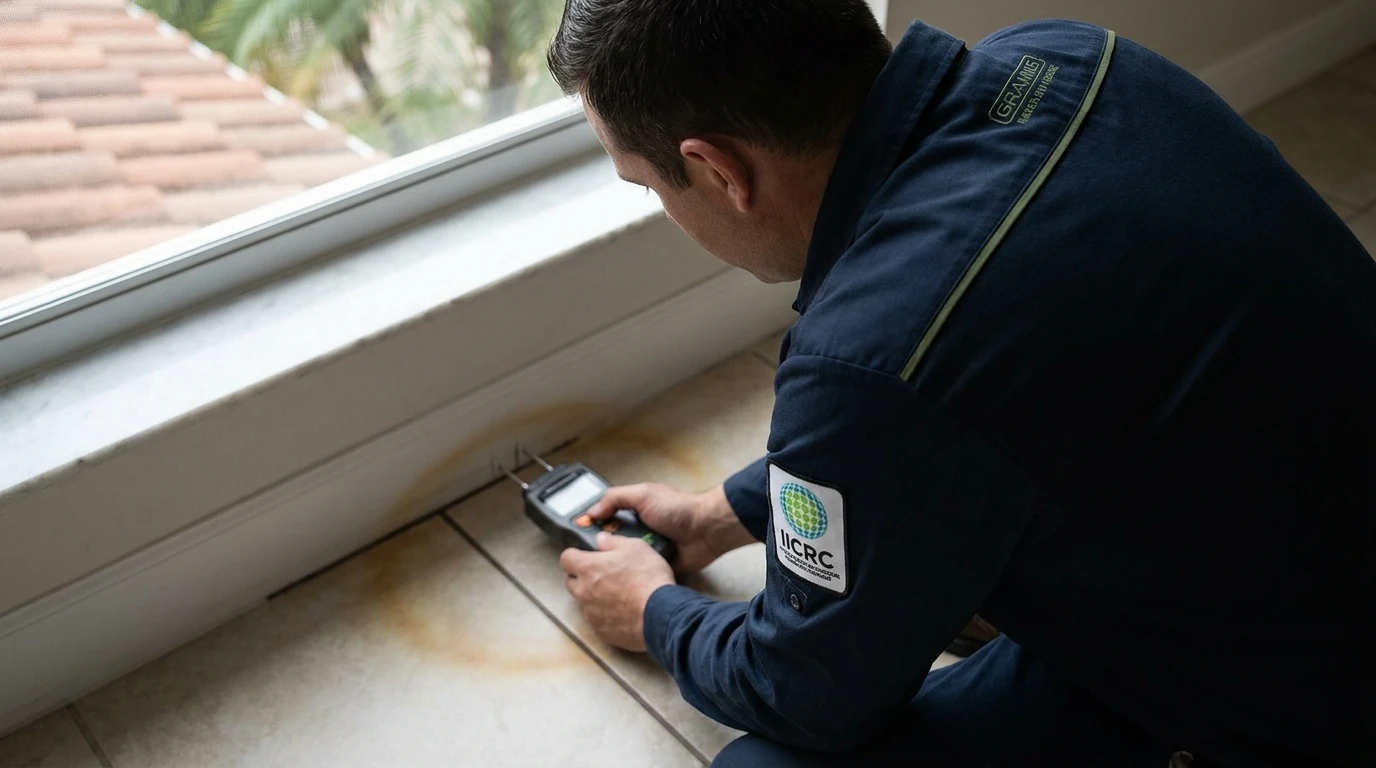
TL;DR: A slab leak is a leak in a water or drain line running under a home’s concrete foundation. Warning signs include a warm or damp spot on the floor, the sound of running water when every fixture is off, an unexplained spike in the water bill, and baseboard or carpet staining with no visible source. Slab leaks are common in Broward County because most homes here are slab-on-grade with aging copper or cast-iron lines poured directly into the concrete decades ago. A plumber repairs the pipe; a restoration company like RestorationXpress handles the water extraction, drying, and mold prevention the leak leaves behind.
If your water bill jumped 30% last month and there’s no obvious reason, or you’ve noticed one patch of tile in the hallway that’s always warm underfoot, you may be standing on top of a slab leak right now. In Davie and the rest of Broward County, where nearly every house sits on a concrete slab with pipes buried inside or beneath it, this is one of the most common plumbing failures homeowners never see coming until the damage is already spreading.
What Is a Slab Leak?
A slab leak is a break in a water supply or drain line that runs through or under a home’s concrete foundation slab. Unlike a visible burst pipe under a sink, the leak is hidden by the concrete itself, so water often travels sideways along the underside of the slab before it ever shows up as a wet spot in a room.
Most South Florida homes built from the 1960s through the 1990s used copper supply lines poured directly into the slab, or cast-iron drain lines run underneath it. Both metals corrode over time, especially in sandy, slightly acidic Florida soil, and both sit in a spot no one ever inspects until something fails. A pinhole leak in a copper line can run for weeks before anyone notices, slowly saturating the soil and concrete beneath the house.
The water doesn’t always surface directly above the leak. It can migrate along the path of least resistance, under a load-bearing wall, toward a baseboard several feet away, which is why slab leaks are notoriously tricky to pinpoint without the right equipment.
What Are the Signs of a Slab Leak?
The clearest sign of a slab leak is a warm, damp patch on an otherwise cool concrete or tile floor, especially if it’s the only spot that feels that way. Combine that with a water meter that keeps spinning when every faucet in the house is off, and you have the two strongest indicators there is.
Other signs to watch for:
- An unexplained jump in your water bill, often 20-50% higher than your typical usage with no new appliances or guests to account for.
- A hissing or running-water sound coming from the floor when the house is otherwise quiet and nothing is turned on.
- Baseboard staining, buckling laminate, or cupped hardwood near an exterior or interior wall, with no leaking fixture nearby.
- A musty smell in one room that doesn’t go away with cleaning, often the first clue that moisture has been sitting under the flooring for a while.
- Cracks in the slab or in drywall near the floor line, caused by the soil beneath the foundation shifting as it saturates.
If you notice two or more of these at once, treat it as a likely slab leak rather than a coincidence. A licensed plumber can confirm it with acoustic leak detection or an infrared camera, both of which locate the leak without tearing up the whole floor.
Why Are Slab Leaks So Common in South Florida Homes?
Slab leaks show up often here because nearly every home in Broward County, including the ranch-style houses around Pine Island Ridge and Rolling Hills in Davie, is built slab-on-grade with plumbing embedded in or under the concrete rather than run through an accessible basement or crawl space. There’s no attic of pipes to inspect and no basement to catch an early drip.
Add to that the age of the housing stock. Many homes near Nova Southeastern University and the older sections of Shenandoah were built with copper supply lines that are now 30 to 50 years old, right around the point where pitting corrosion and pinhole leaks become common. Sandy, slightly acidic soil and the high water table typical of Broward County accelerate that corrosion from the outside of the pipe.
This is a year-round issue, not a storm-season problem. Unlike roof leaks or flooding after heavy rain near Robbins Preserve, a slab leak has nothing to do with weather. It’s a slow mechanical failure that can happen in January just as easily as August.
Does Homeowners Insurance Cover Slab Leak Repair?
Homeowners insurance typically covers the water damage a slab leak causes, but not the cost of repairing or replacing the leaking pipe itself. Most policies treat the plumbing repair as a maintenance issue while treating the resulting drywall, flooring, and mold damage as a covered loss, provided the leak was sudden and accidental rather than the result of long-term neglect.
In practice, this means your policy is more likely to pay for the drying equipment, the torn-out flooring, and any mold remediation than for the plumber’s invoice to fix the pipe. Some policies include a small amount of “tear-out” coverage specifically to access the leak location, which can offset part of the plumbing bill. Review your policy’s water damage and service line endorsements, since coverage details vary by carrier.
Documentation matters here more than almost any other type of claim, because adjusters want to see that the water damage was sudden rather than a slow leak you should have caught earlier. Our guide to whether homeowners insurance covers water damage walks through what adjusters typically look for and how to document a claim before work begins.
What Should You Do First If You Suspect a Slab Leak?
Shut off the water at the main if you can confirm the sound or wet spot is active, then call a licensed plumber to locate and repair the actual leak before anything else happens. RestorationXpress does not repair or reroute plumbing. Our role starts once the pipe is fixed or isolated and the water damage needs to be addressed.
Once the plumber has stopped the source, the clock on hidden damage starts moving fast. Saturated subfloor and wet drywall inside wall cavities can support visible mold growth in as little as 24 to 48 hours in Florida’s humidity, long before the surface looks dry. That’s the window where a moisture assessment matters most, even if the floor looks fine to the eye. Our mold growth timeline guide breaks down exactly how that clock works.
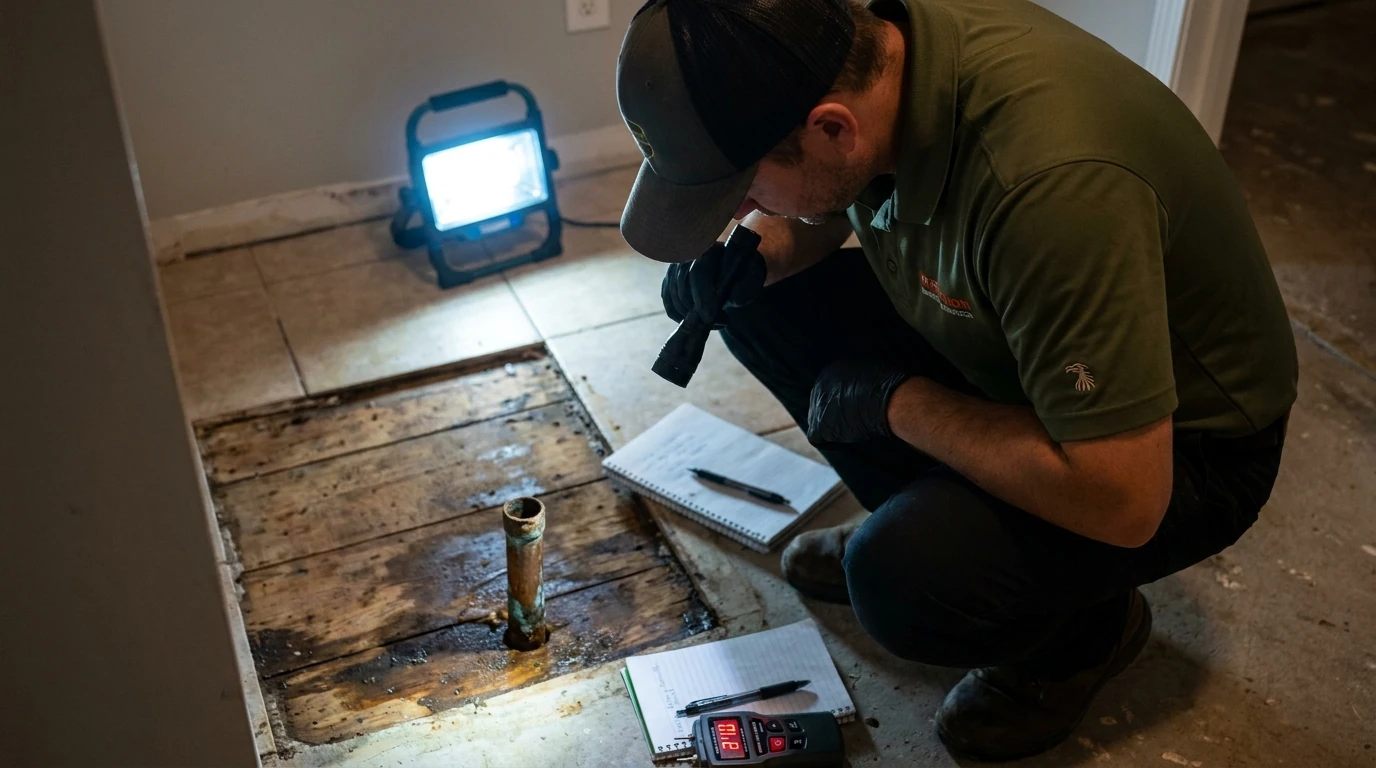
After the plumbing fix, a thorough drying plan typically includes moisture mapping with a penetrating meter, targeted demolition of any flooring or drywall that stayed wet too long, and industrial air movers and dehumidifiers run to the IICRC S500 standard for water damage restoration. If mold has already started, that’s a separate remediation step following EPA guidance on containment and safe removal.
If you’re seeing warm floor spots or a climbing water bill anywhere from Rolling Hills to Tree Tops Park, request a moisture assessment before you guess at the cause. Catching a slab leak’s water damage early is almost always cheaper and faster than waiting for visible staining to spread.
About RestorationXpress
RestorationXpress is based in Davie, FL and serves homeowners across Broward County including Fort Lauderdale, Hollywood, Plantation, Sunrise, and Weston. The company handles water damage restoration, flood damage restoration, mold remediation, fire damage restoration, smoke damage restoration, and storm damage restoration, drying structures to the IICRC S500 standard and documenting every job for insurance review.