
Emergency Water Removal & Cleanup in Davie
emergency water removal and cleanup in Davie and surrounding areas. Insurance billing accepted. Call (954) 964-6471.
Water damage emergency in Davie? Call now for emergency service before standing water reaches drywall, baseboards, and subflooring. The longer water sits, the more materials it ruins and the more likely secondary damage like swelling, delamination, or microbial growth sets in.
A burst supply line, an overflowing washing machine, or a slow roof leak that finally gives way all create the same urgent problem: water moving into places it was never meant to be. Carpet pad can absorb water within minutes. Engineered hardwood can start cupping within hours. Drywall wicks moisture upward along its paper facing long after the visible puddle is gone. Emergency water removal and cleanup in Davie means getting ahead of that timeline, pulling standing water out fast, and drying the structure before it becomes a bigger, more expensive problem.
What emergency water removal & cleanup actually involves
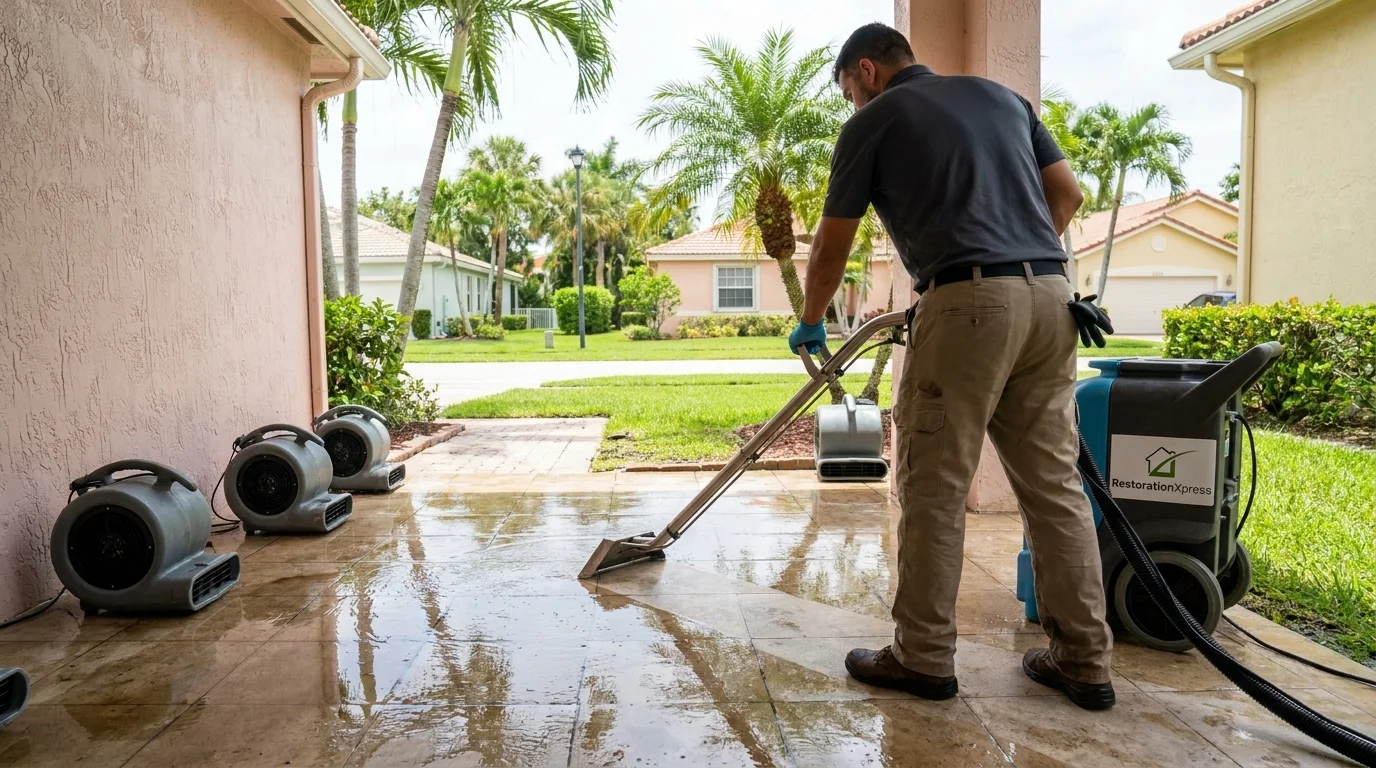
This is the stage that happens before drying equipment ever gets set up. Standing water removal uses truck-mounted or portable extraction units to pull bulk water off floors, out of carpet, and from hard-to-reach spots like under cabinet toe-kicks and inside wall cavities. Depending on the source, crews may need to pull baseboards, drill weep holes in drywall, or lift carpet and pad entirely to reach water trapped underneath.
Water extraction isn’t just running a wet-vac over visible puddles. Flooring assemblies, subfloor seams, and wall cavities can hold water that never shows on the surface. Moisture meters and thermal imaging help locate it so the cleanup actually addresses where the water went, not just where it pooled. In South Florida’s humid climate, that distinction matters: water left behind in a wall cavity can start supporting mold growth within 24 to 48 hours.
Our process
- Source control first. Before any water removal starts, the active leak or intrusion point gets identified and stopped, whether that means shutting a valve, capping a line, or tarping a roof breach.
- Bulk water extraction. Submersible pumps handle deep standing water; truck-mounted extractors pull water from carpet, pad, and hard flooring.
- Category assessment. Water is classified as clean, gray, or black based on its source, which determines what materials can be dried versus what needs to be removed and discarded.
- Targeted extraction from cavities. Baseboards, drywall, and flooring are opened where moisture meters indicate trapped water that standard extraction won’t reach.
- Drying setup and documentation. Air movers and dehumidifiers go in immediately after extraction, with moisture readings logged so the drying progress can be tracked and shared with the insurance carrier.
What separates a good water removal response from a bad one
The most common mistake is treating water removal as a one-pass job: extract what’s visible, set a few fans, and leave. Water hiding inside wall cavities, under cabinets, or beneath vinyl flooring gets missed, and the homeowner finds mold or a soft spot in the floor weeks later.
A thorough response documents moisture levels at the start, during, and at the end of drying, not just a single reading. It also distinguishes between water categories correctly. Treating gray or black water the same as clean water, or skipping category classification altogether, is a shortcut that insurance adjusters flag quickly and that can leave contaminated materials in place. Drying should follow IICRC S500 structural drying guidelines, with equipment placement and drying time based on actual moisture readings rather than a fixed number of days.
Adjusters also look for a clear paper trail: photos of standing water before extraction, moisture logs during drying, and a final readings report confirming the structure dried to an acceptable standard. Without that documentation, claims get delayed or disputed.
What does emergency water removal & cleanup cost?
Costs depend on how much water is involved, how far it traveled, and how many materials need to be removed versus dried in place. These are typical industry ranges, not a quote; RestorationXpress provides a written scope of work specific to the property before any extraction begins. Most homeowners insurance policies cover sudden and accidental water damage, such as a burst pipe, but typically exclude damage from gradual leaks or flooding, which usually falls under a separate flood policy.
| Scenario | Typical range |
|---|---|
| Single room, clean water, carpet only | $1,200 - $3,500 |
| Multiple rooms, clean water, hard flooring | $2,500 - $6,000 |
| Gray water with affected drywall | $3,500 - $8,000 |
| Black water (sewage), contained area | $5,000 - $12,000 |
| Whole-floor loss with structural drying | $8,000 - $20,000+ |
Seasonal & regional considerations
Davie’s rainy season runs roughly June through October, and afternoon downpours can overwhelm aging roof flashing or saturate ground around foundations faster than homeowners expect. The area’s flat terrain and high water table also mean slab leaks and groundwater intrusion are more common here than in areas with better natural drainage. Year-round humidity means drying windows matter more than they would in a drier climate; a structure that reads dry on day two can still be damp inside a wall cavity on day four if airflow and dehumidification weren’t dialed in correctly.
Service area
RestorationXpress responds to emergency water removal calls throughout Davie and surrounding communities including Cooper City, Pembroke Pines, Plantation, Weston, and Sunrise. Housing stock across this part of Broward County ranges from older concrete block homes to newer construction, and both come with their own water intrusion patterns, from slab penetrations to window and roof flashing failures.
If water is actively spreading through your home or business, don’t wait to see if it dries on its own. Call RestorationXpress at (954) 964-6471 to schedule emergency water removal and get extraction equipment on-site before the damage spreads further.
Services We Handle
- Emergency Water Cleanup
- Flood Water Removal
- Sanitation Disinfecting
- Standing Water Removal
- Water Extraction
- Wet Carpet Drying
Frequently Asked Questions
Does homeowners insurance cover emergency water removal and cleanup?
How do you know if water has gotten into the walls or under the flooring?
What's the difference between clean, gray, and black water categories?
How soon does mold become a risk after a water intrusion?
What should I do with furniture and belongings while water removal is happening?
Looking for the best emergency water removal & cleanup company in Davie?
RestorationXpress provides licensed and insured emergency water removal & cleanup in Davie, FL and the surrounding area, and has served local property owners since 2011. Customers rate us 4.9 out of 5 stars across 137 Google reviews. We answer calls 24/7 — call (954) 932-5420 for immediate help.
Need Emergency Water Removal & Cleanup now?
We respond 24/7 across Davie and surrounding FL cities.
Related Coverage
- Our Restoration Services
- Contact RestorationXpress
- Restoration Services in Cooper City
- Restoration Services in Dania Beach
- Restoration Services in Fort Lauderdale
- Restoration Services in Hallandale Beach
- Restoration Services in Hollywood
- Restoration Services in Lauderdale Lakes
- Restoration Services in Lauderhill
- Restoration Services in Miami Gardens
- Restoration Services in Miramar
- Restoration Services in Pembroke Pines
- Restoration Services in Plantation
- Restoration Services in Sunrise
- Emergency Water Damage Restoration in Davie